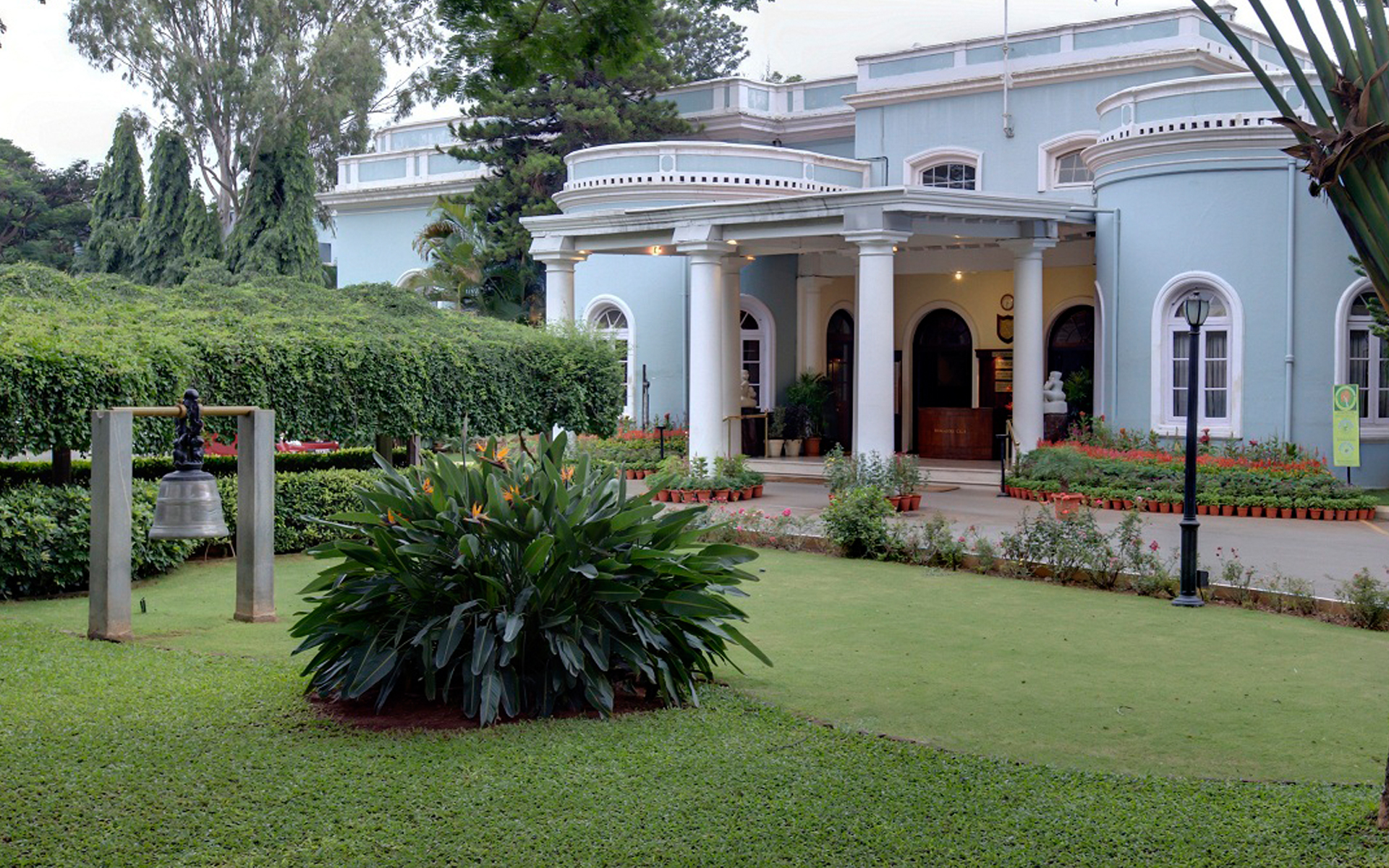
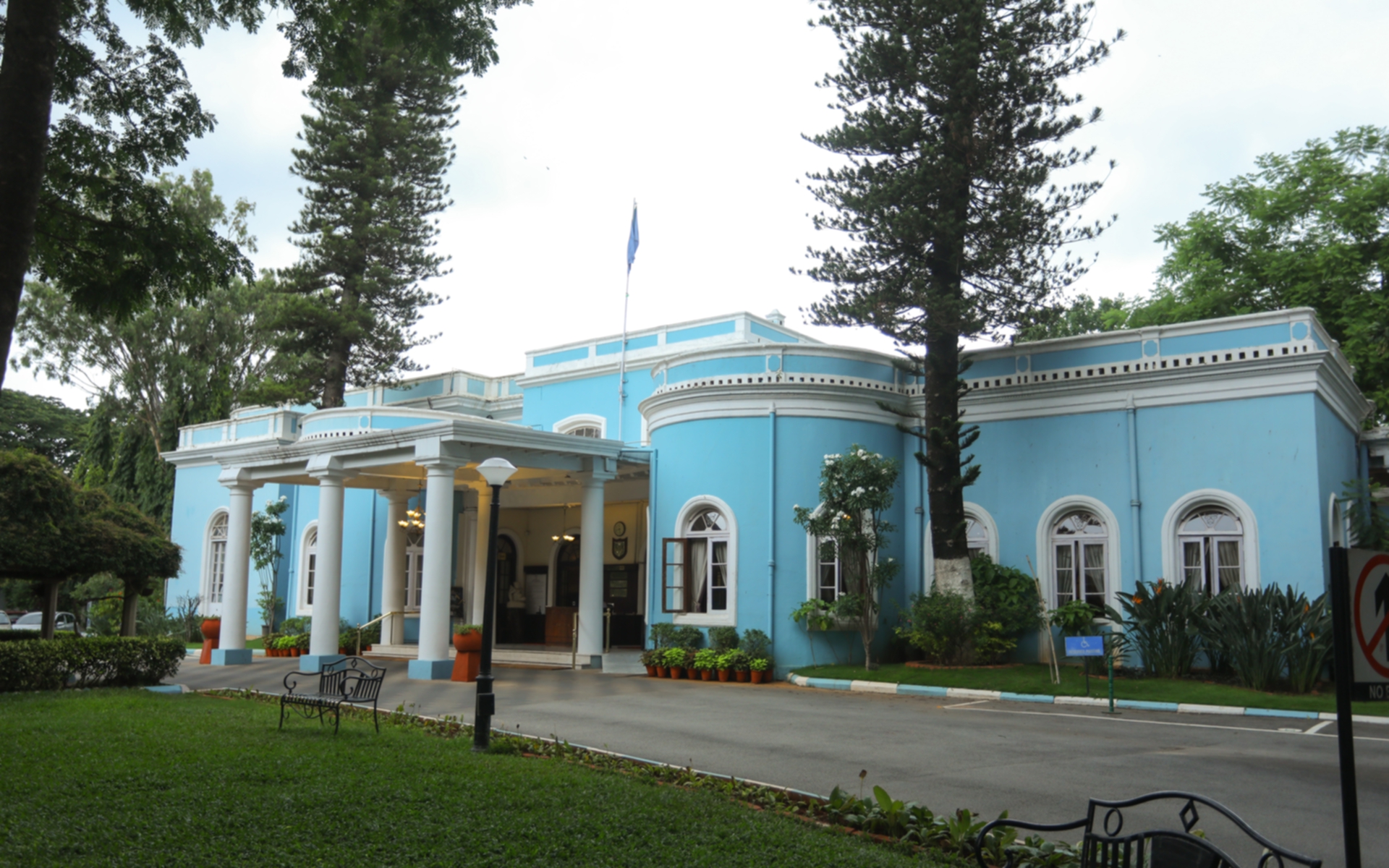
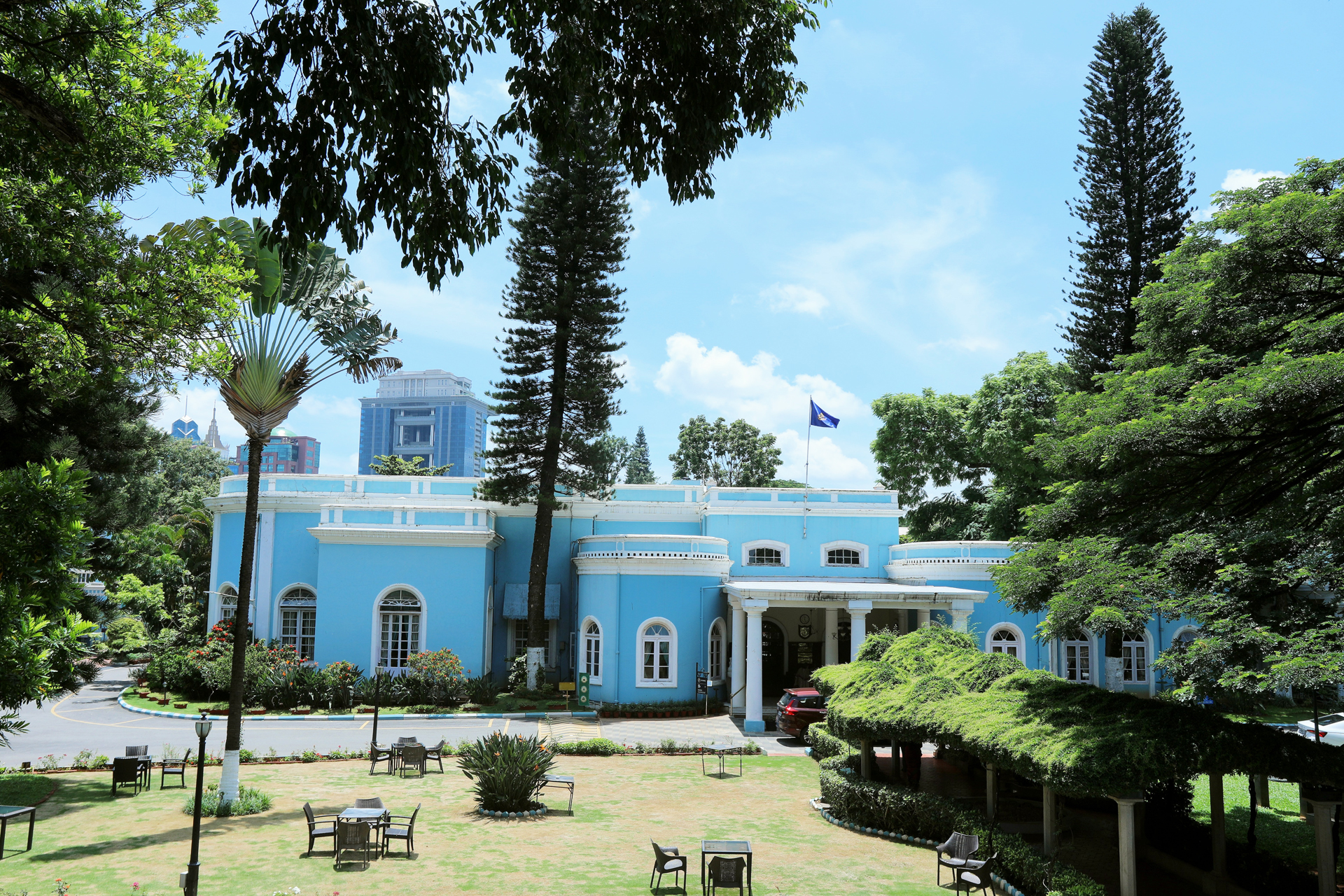
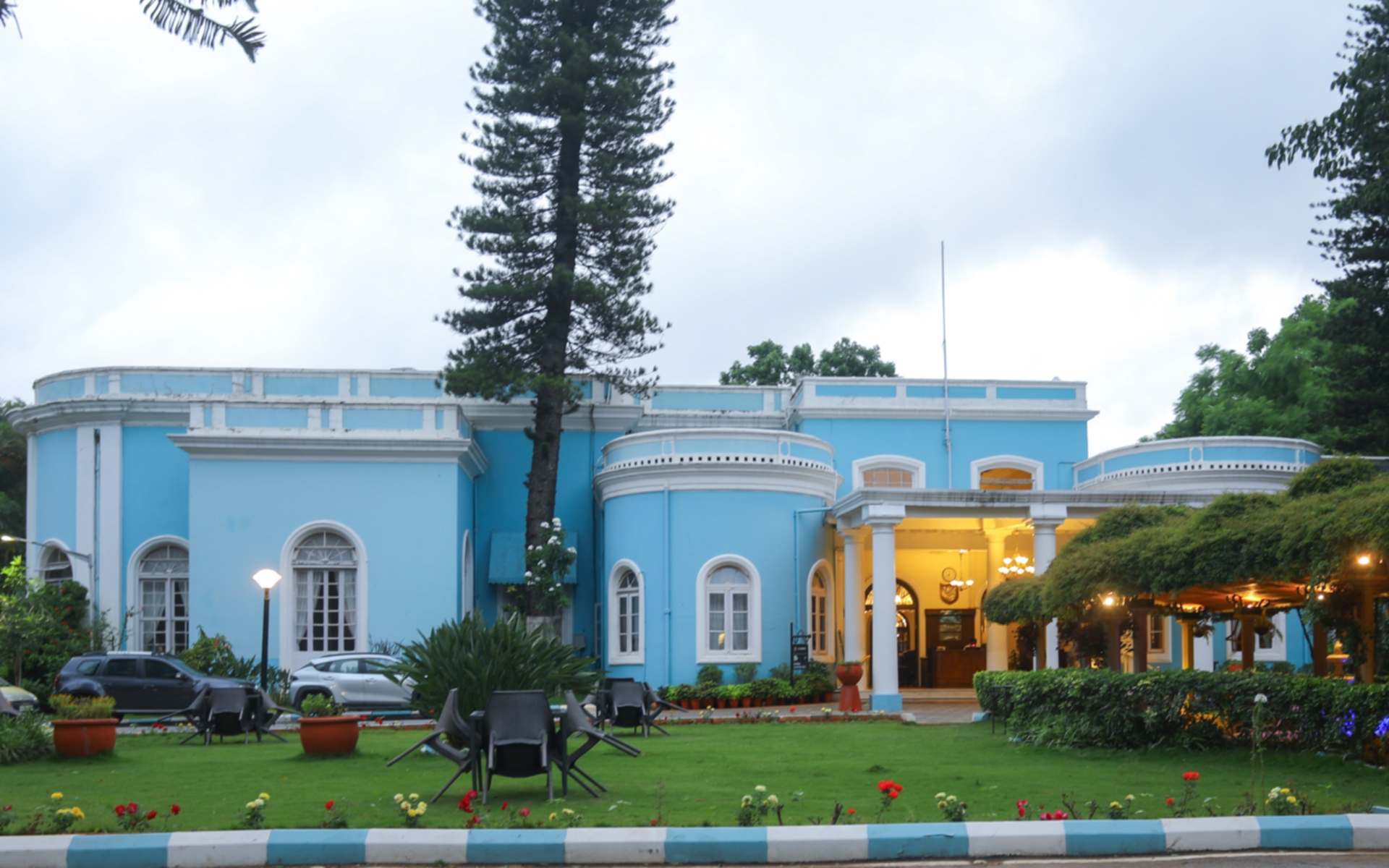
Built in the early 1800s. Resembling the British Residencies across the country with its Madras Terrace Roof, high portico, Tuscan and Doric columns, decorative mouldings and Roman arched windows, it is considered one of the finest and last surviving examples of colonial bungalow architecture in the city.
Main Hall
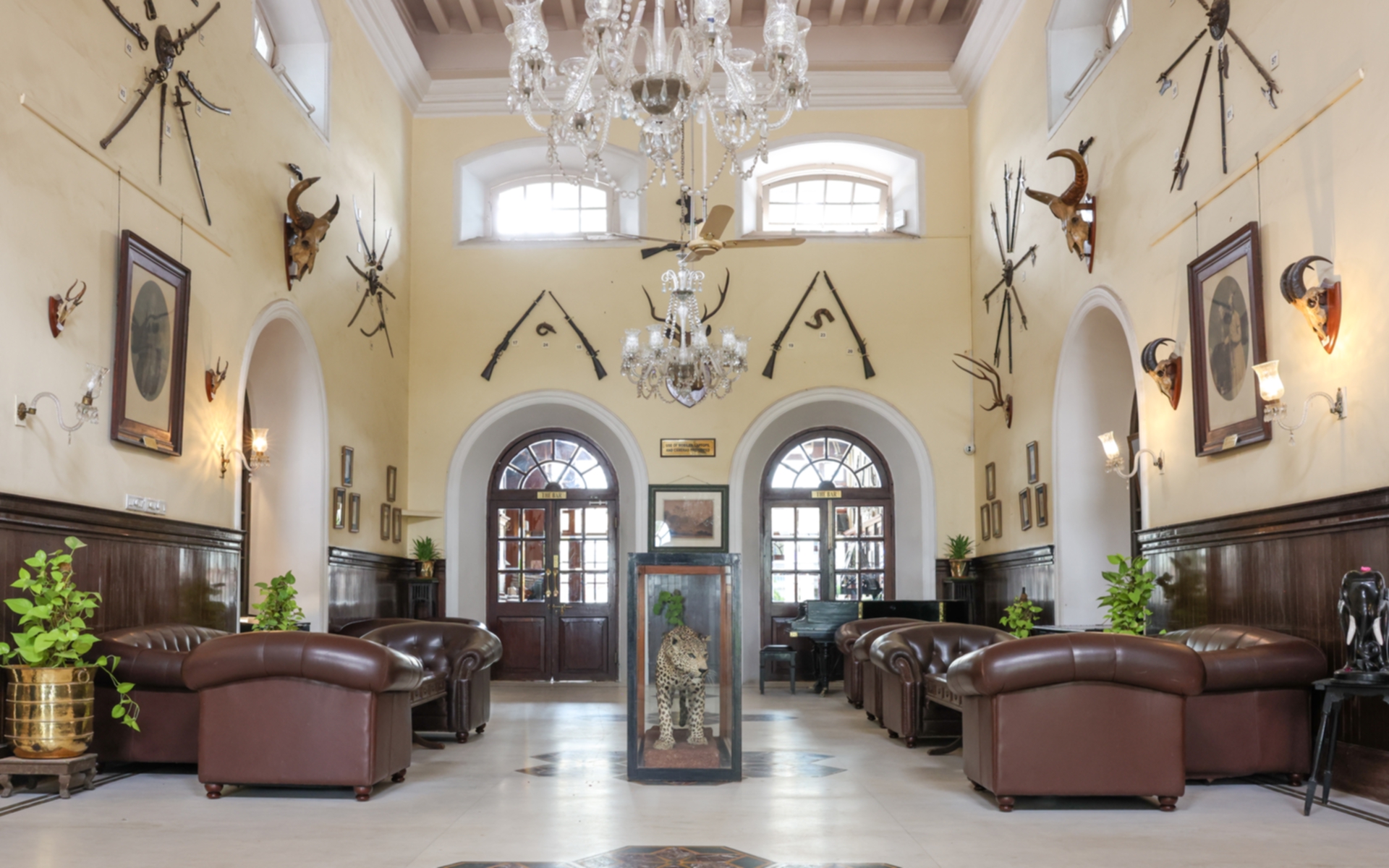
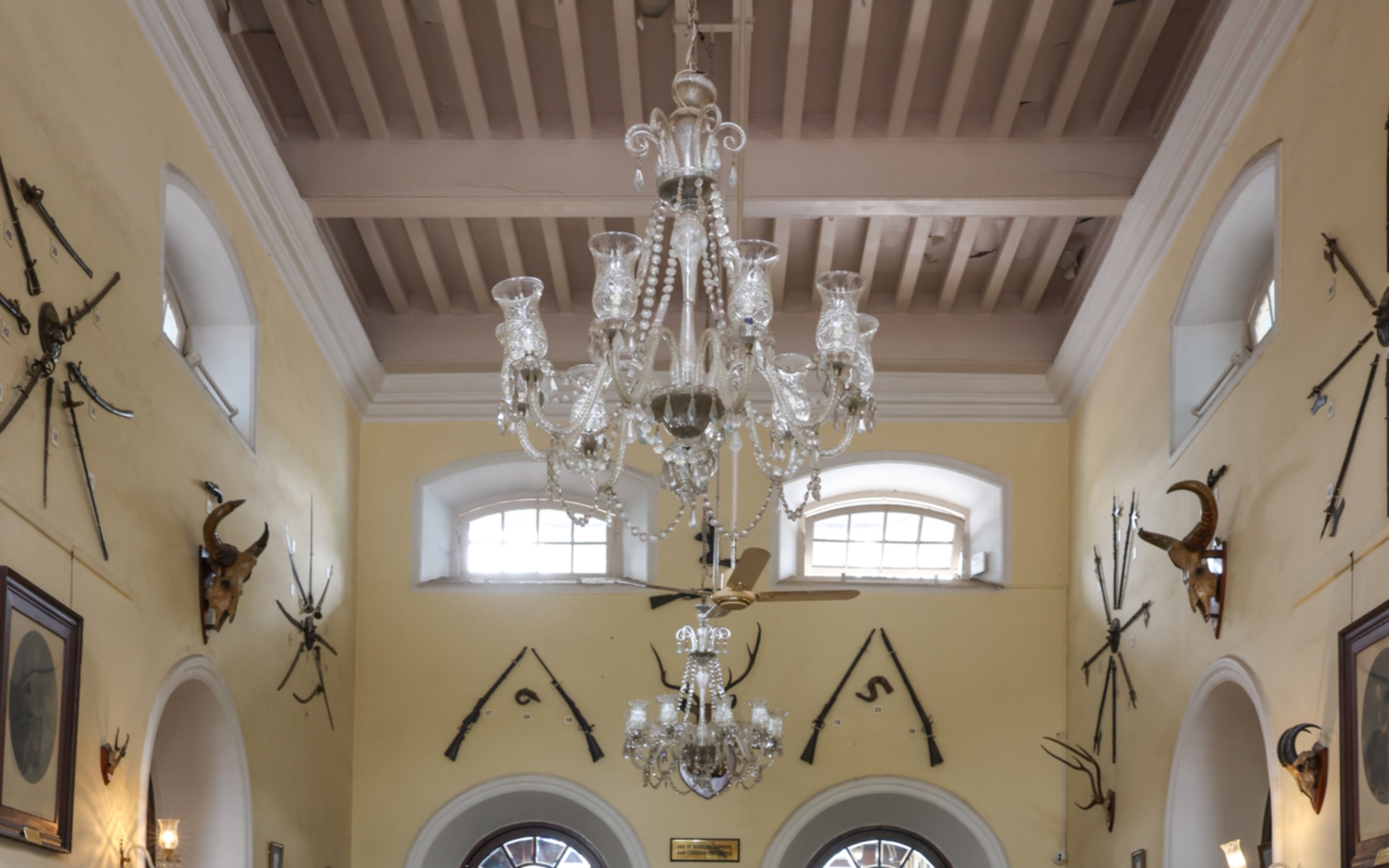
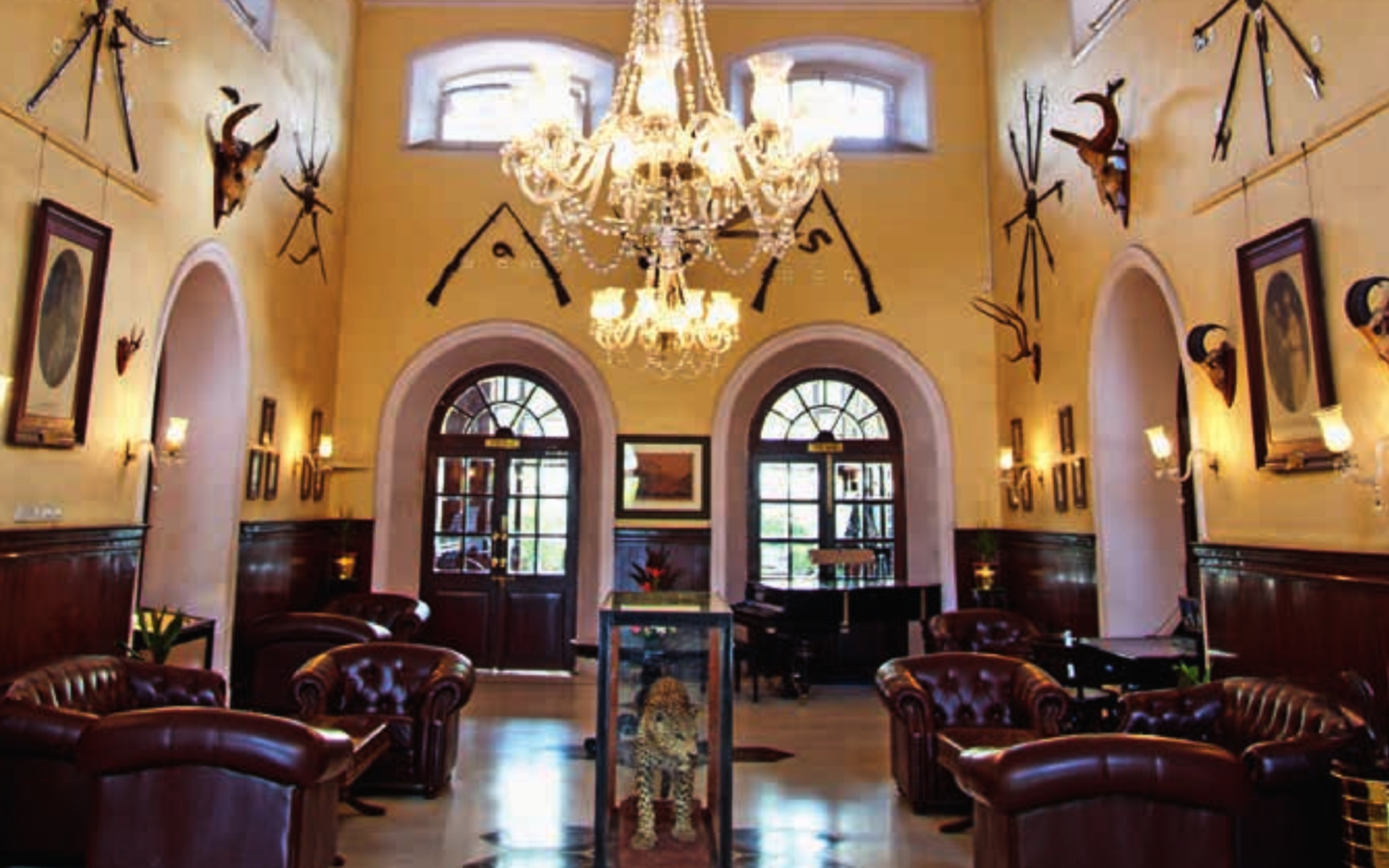
One of the oldest and most carefully preserved spaces in the club. Once called The Centre Room, vintage weapons, photographs and game heads presented by members adorn its walls. Its high ceiling is supported by Burma teak beams and the skylights placed high above make allowance for additional light and circulation of air. In 1939, teakwood screens and swinging doors were added on either side. A grand piano and Brigadier Hill’s elegant Victorian-era rose wood writing desk and chair are ensconced in the Hall with a stuffed leopard presented to the club by the Forest Department of Karnataka finding pride of place at its centre. The well-preserved antiquity of the Main Hall can be seen in its depiction as the Chandrapore Club in David Lean’s period movie, ‘A Passage to India’.
Mysore Room
The Mysore Room, recalling the spirit of princely Mysore, was the Mixed Lounge and Ladies Reading Room in 1939.
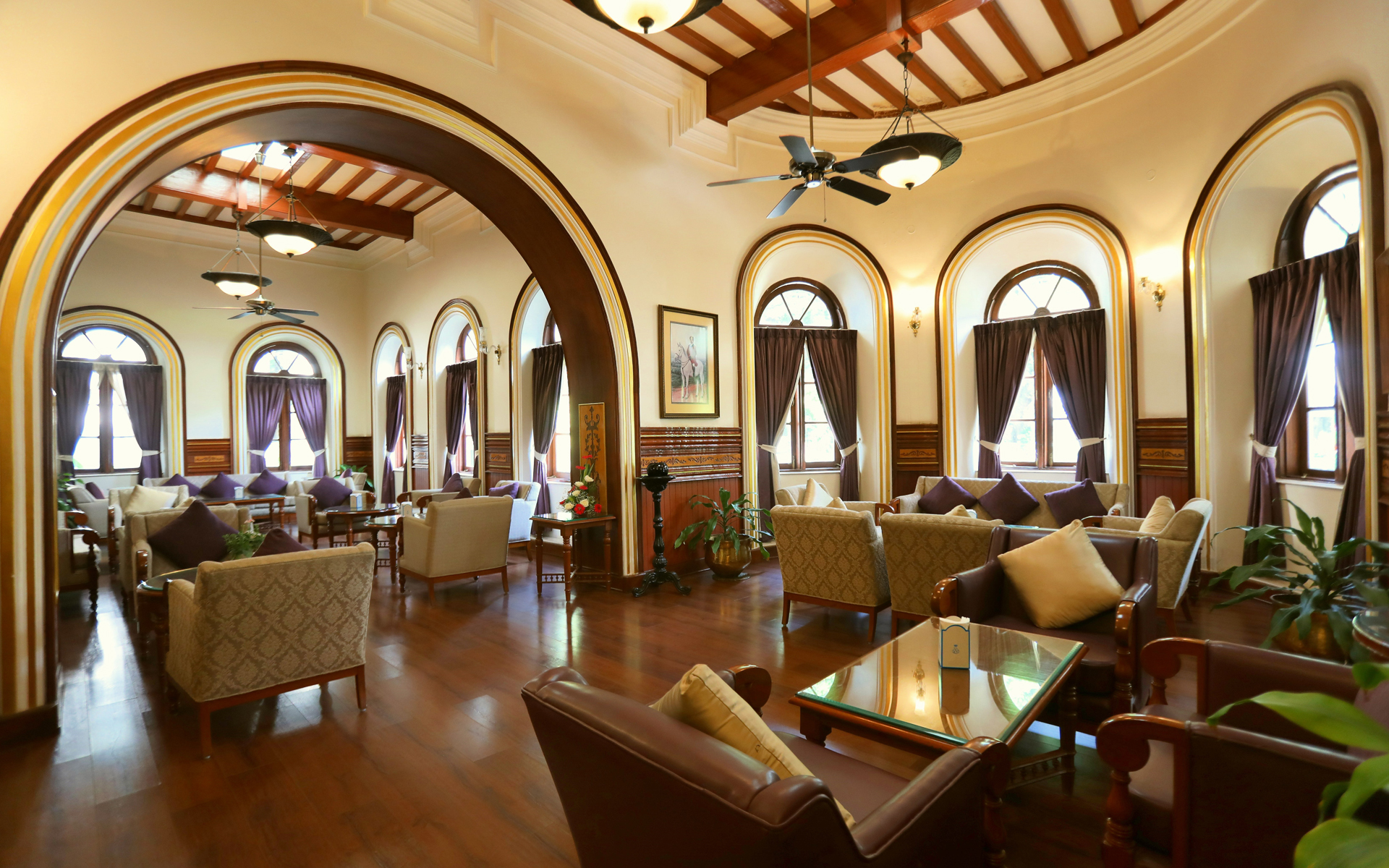
Buttery Bar
A cosy, air-conditioned ante-room that accommodates the influx from the Dining Room. The Mixed Supper Room in 1939 and the Wireless Room during the Second World War, its name refers to the ‘buttery’, a cellar in which wine casks and beer were stored in Elizabethan England.
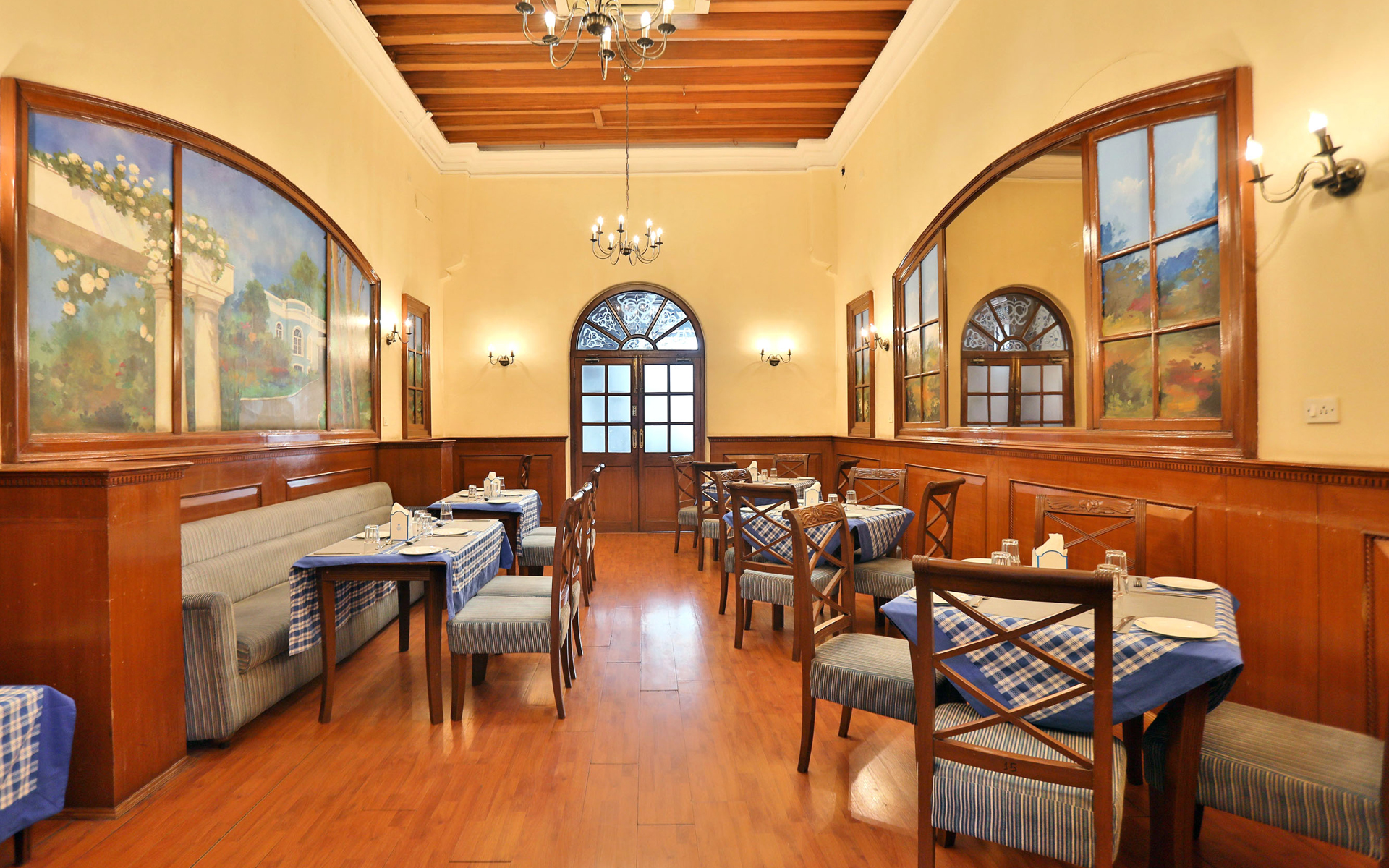
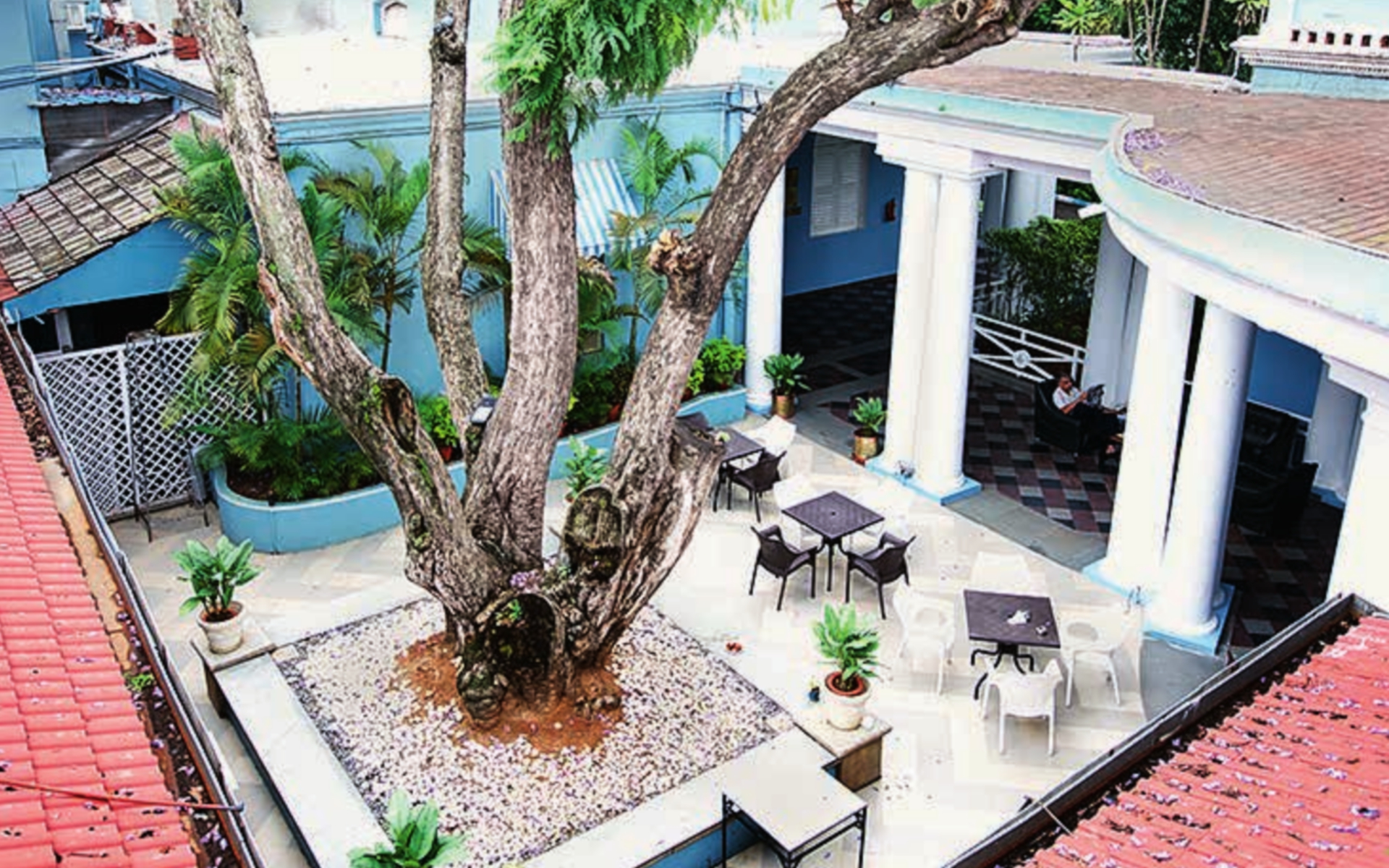
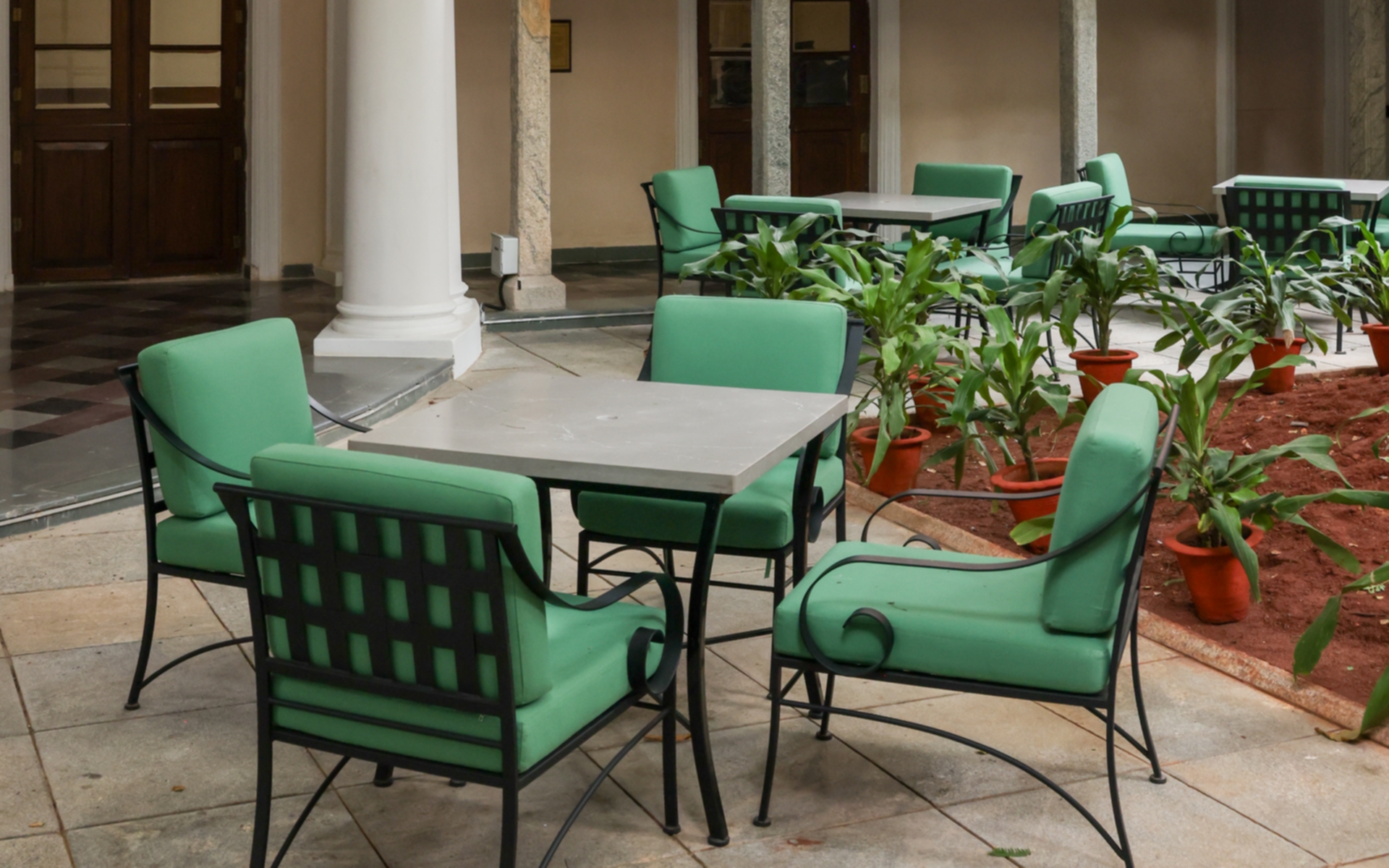
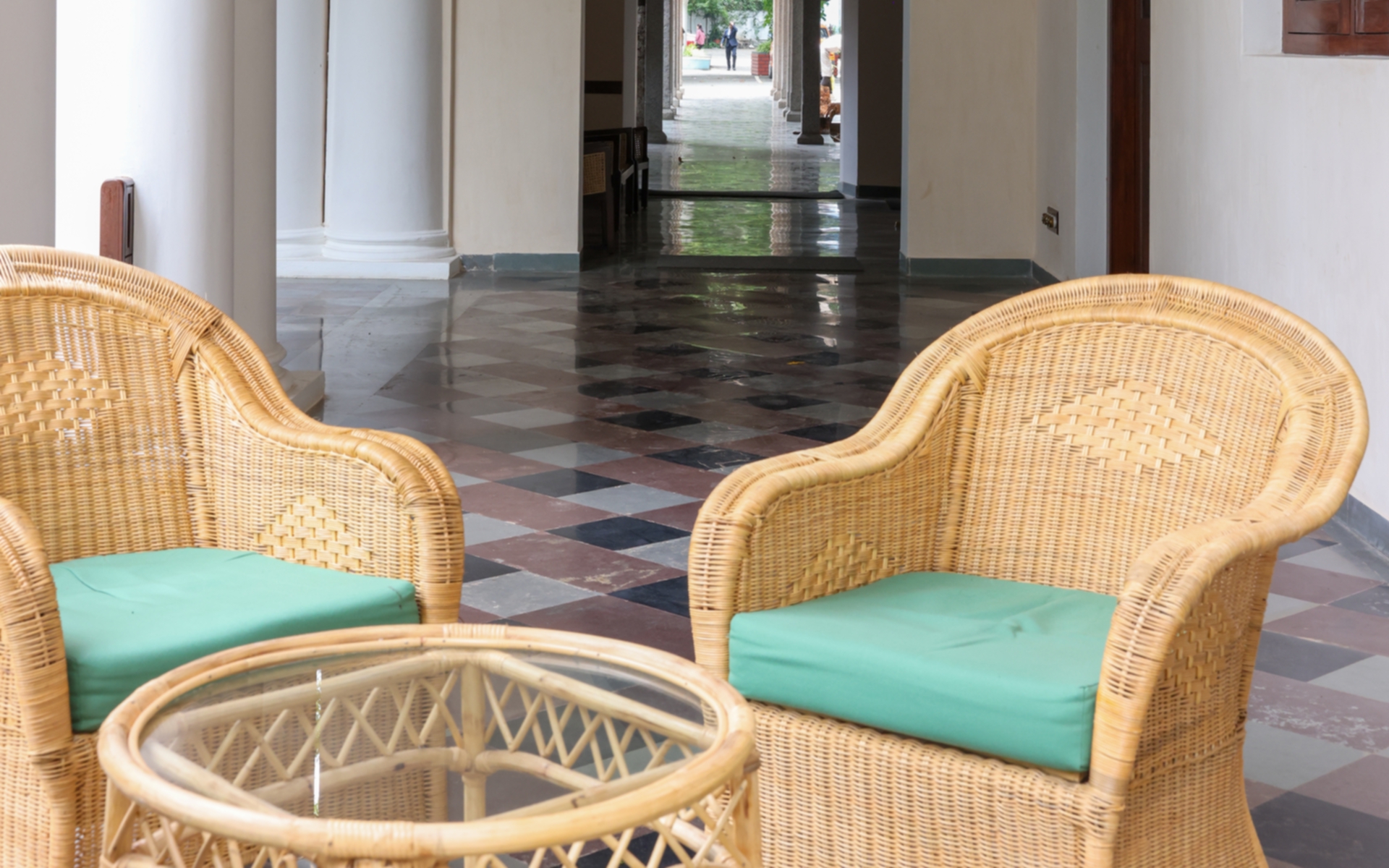
Patio
1868
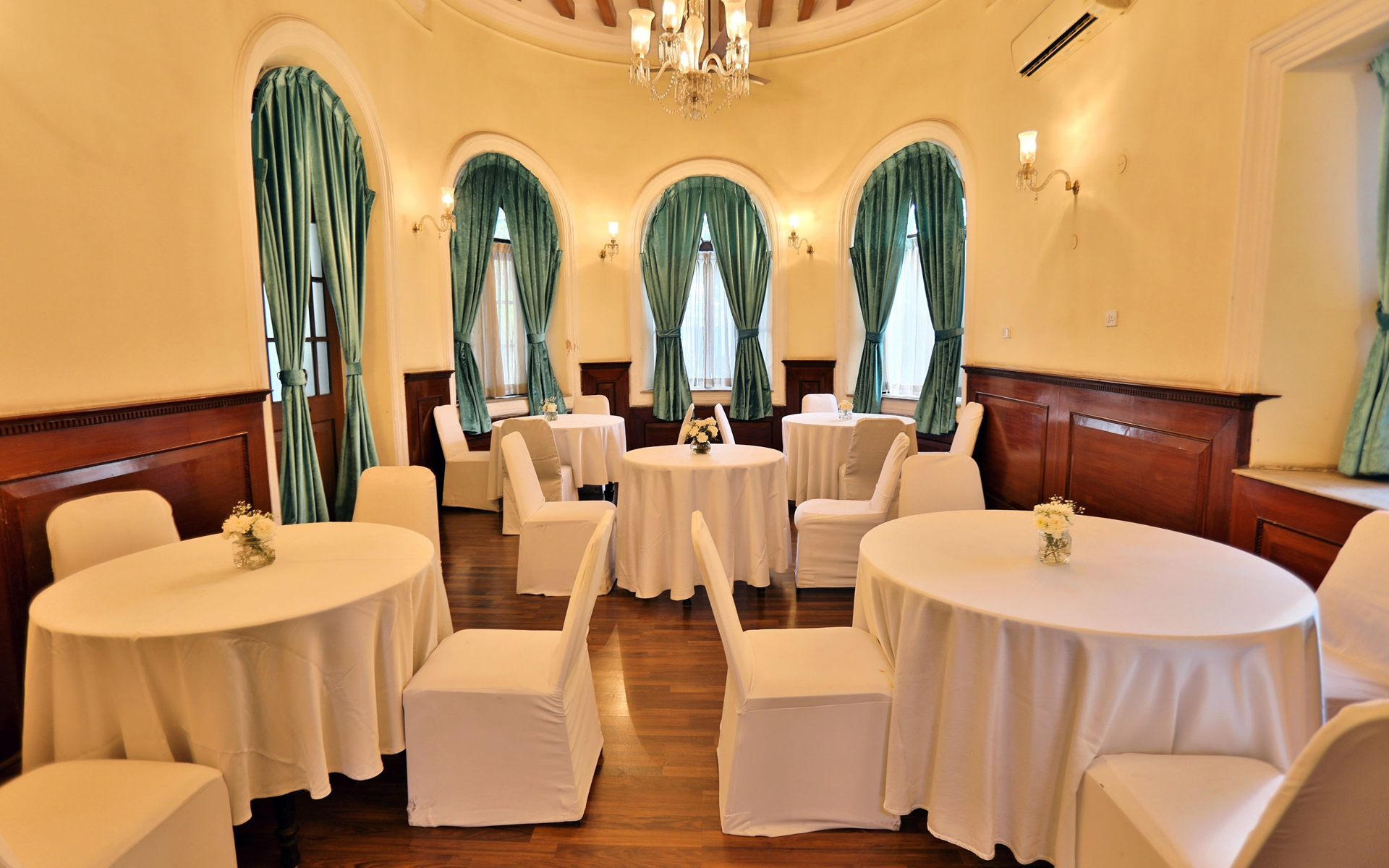
Named after the year that the club came into being, a modest ante-room near the Dining Room for small groups desiring to dine in privacy. Was the Mixed Card Room in 1939 and a Salad Bar and Bridge Room thereafter.